


Bedtime Stretches to Relieve Back Pain

Gentle nighttime stretches — knee-to-chest pulls, lumbar rotations, and Cat-Cow poses — ease tension and calm muscles before sleep. Stretching increases blood flow and relaxes the body, both essential for overnight recovery. For deeper relief, pairing these movements with the TheraSpine Triple Fusion Pillow delivers targeted spinal decompression while you sleep — 97% of users report feeling relief within two weeks.
Key Takeaways
- Gentle stretching before bed relieves muscle tension and improves blood flow for better sleep quality.
- Simple nighttime stretches break the frustrating cycle between back pain and poor sleep patterns.
- Eight basic stretches, including knee-to-chest and Cat-Cow poses, effectively reduce lower back pain.
- Regular stretching habits help your back manage discomfort and support muscle recovery overnight.
- TheraSpine's Triple Fusion Pillow extends the benefits of bedtime stretches throughout the entire night.
What Do You Need Before Nighttime Stretches?
Preparation matters more than the stretches themselves. Back pain disrupts sleep for a significant share of adults. A few minutes of setup before lying down determines whether the following stretches actually calm the spine or leave it fighting for alignment.
What Tools Help Support a Stretching Routine?
A contoured support surface designed for the lumbar curve gives stretches something structured to work against. The TheraSpine Triple Fusion Pillow was built specifically to target spinal alignment rather than offer generic cushioning. That precision helps reduce stiffness before movement even begins. Most people stretch on their mattress, finish in ten minutes, and then spend eight hours on the same unsupported surface that caused the problem. TheraSpine changes that equation — it turns the entire night into active recovery.
How Should the Pace of Stretching Change at Night?
Movement should slow down, not speed up. Low-intensity, controlled stretching is the preferred approach before bed. Vigorous exercise close to sleep can interfere with rest instead of easing it. Building this pacing into a nightly relaxation routine turns bedtime stretches into a consistent, repeatable habit rather than a one-off attempt at relief.
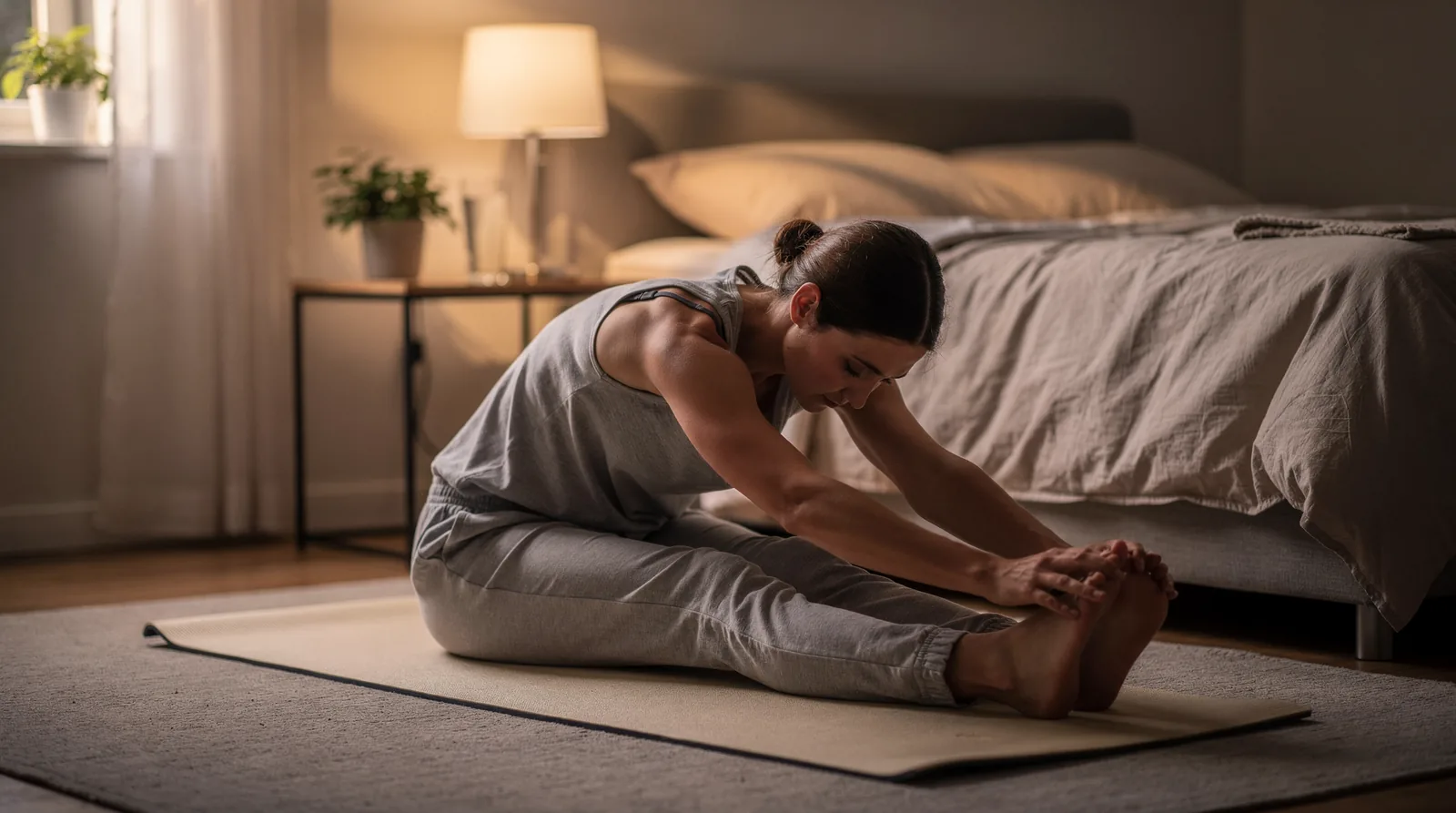
Which Stretches Reduce Stiffness Before Bed?
Two movements stand out for easing nighttime spinal tension: the knee-to-chest stretch and Cat-Cow. Both are effective options within a broader set of eight stretches designed to relieve lower back pain. The science points to movement, not stillness, as the more reliable path to relief. A short, consistent relaxation routine performed before lights-out gives muscles a chance to release tension built up over the day.
How Do the Knee-to-Chest and Cat-Cow Stretches Work?
The knee-to-chest stretch pulls one leg toward the torso while lying flat, lengthening the lower spine and easing compression. Cat-Cow alternates spinal flexion and extension on hands and knees, mobilizing each vertebra in sequence. Together, these movements target the same stiffness that builds during long hours of sitting or inactivity.
To build bedtime stretches into a nightly habit, follow these steps:
- Lie on a flat, supportive surface.
- Perform the knee-to-chest stretch on each side, holding steadily before releasing.
- Transition to hands and knees for Cat-Cow, moving slowly and repeating with controlled breathing.
- Breathe deeply throughout, keeping movements controlled rather than rushed.
- After finishing, position your TheraSpine Triple Fusion Pillow for overnight lumbar decompression — extending the relief your stretches started.
Stretching alone works well for temporary relief, but the real magic happens when you combine a nightly routine with targeted spinal support. Ninety-seven percent of TheraSpine users reported feeling relief within two weeks of consistent use. The pillow reinforces what stretching starts — turning ten minutes of effort into eight hours of active recovery.

What If Stretching Does Not Stop Nighttime Pain?
Some cases of lower back stiffness resist even a consistent relaxation routine of nightly stretches. Persistent nerve tension or compressed discs often need more than muscle-level relief. Ongoing nighttime pain, muscle cramps, or continued sleep disruption may warrant a conversation with a doctor — but they also point to a clear gap that stretching alone cannot fill.
When Does Stretching Stop Being Enough?
Stretching addresses surface-level muscle tightness, but it cannot decompress the spine itself. For people dealing with deeper structural pressure, added support becomes necessary to reduce stiffness at its source.
This is exactly the problem the TheraSpine Triple Fusion Pillow was designed to solve. Rated 4.9 out of 5 by more than 30,450 customers, the device targets the root cause of back pain instead of masking symptoms temporarily. Its orthopedic design outperforms conventional alternatives in two measurable ways:
- Reduces morning stiffness through targeted lumbar decompression
- Improves sleep posture more consistently than standard pillow support
For chronic sufferers, pairing bedtime stretches with TheraSpine closes the gap that stretching alone leaves open.
Why TheraSpine Works While You Sleep
Most back pain solutions require you to do something — stretch, exercise, visit a therapist. TheraSpine flips that model. The Triple Fusion Pillow works passively while you sleep, decompressing the lumbar spine hour after hour through the night. You do your bedtime stretches, position the pillow, and let it do the rest.
The numbers tell the story:
- 4.9 out of 5 stars from 30,450+ verified customers
- 97% of users report noticeable relief within just two weeks
- Thousands of units sold monthly to a growing community of back pain sufferers
- Designed specifically for spinal alignment — not generic comfort
If you have tried stretching, adjusting your mattress, and changing sleep positions without lasting results, the missing piece is targeted lumbar decompression. TheraSpine delivers exactly that.
FAQ
What stretches work best for nighttime back pain?
The knee-to-chest stretch and Cat-Cow pose reduce stiffness effectively. These movements lengthen the lower spine and mobilize each vertebra, targeting tension built up from long hours of sitting or inactivity.
How fast should you move during nighttime stretches?
Slow down rather than speed up. Low-intensity, controlled stretching works best before bed, since vigorous exercise close to sleep interferes with rest instead of easing it.
What supports better spinal alignment during and after stretches?
A contoured support surface designed for the lumbar curve helps. The TheraSpine Triple Fusion Pillow targets spinal alignment specifically, giving stretches a structured foundation and extending relief through the entire night.
How quickly does TheraSpine provide results?
Ninety-seven percent of users report feeling relief within two weeks of consistent use. Combined with nightly bedtime stretches, results can come even faster as the stretching and decompression work together.
Conclusion
Nighttime stretches are the foundation of any serious back pain management strategy — but they are only half the solution. The other half happens while you sleep. By combining evidence-based bedtime stretches with the TheraSpine Triple Fusion Pillow, you turn ten minutes of stretching into eight hours of active spinal recovery. Stop waking up stiff. Start waking up pain-free.