


Desk Exercises for Quick Office Mobility
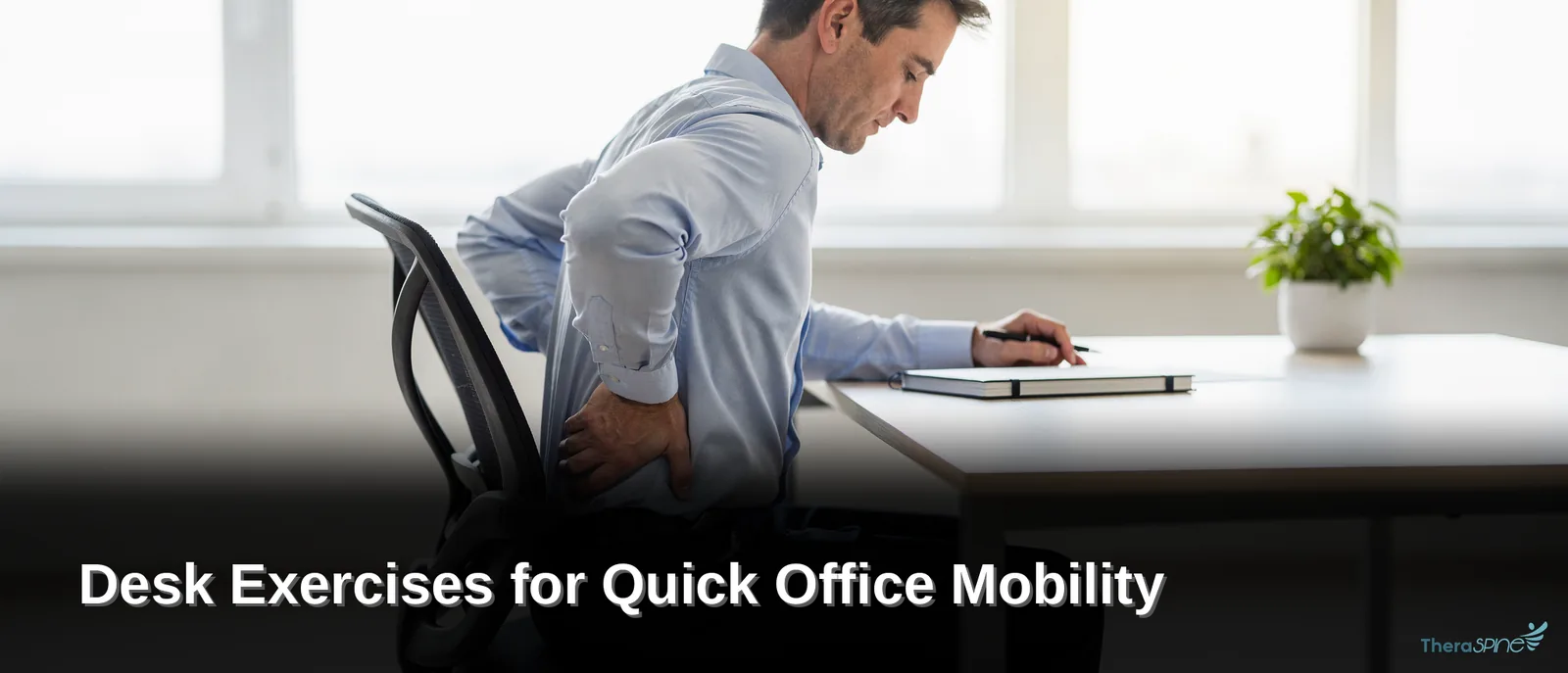
Neck stretches, shoulder stretches, hip and knee flexion, and hamstring stretches work well right at your desk — hold each position for 10 to 30 seconds. Set a timer to repeat this quick routine every hour to counter stiffness from prolonged sitting. Pairing these movements with targeted spinal support from TheraSpine's Triple Fusion Pillow takes your recovery even further.
Key Takeaways
- Prolonged desk sitting contributes to neck, shoulder, and lower back pain through musculoskeletal strain.
- Chair-based stretches like triceps reaches and shoulder rolls improve posture without leaving your workspace.
- Mobility exercises performed at your desk reduce pain and enhance movement quality throughout workdays.
- Regular deskercise routines combat the negative effects of sitting in one position for hours.
- Combining desk exercises with TheraSpine's Triple Fusion Pillow delivers faster, more lasting relief than stretching alone.
Why Does Sitting Cause Back Stiffness?
Prolonged sitting locks the spine into one position for hours at a time, straining muscles that were built to move. Desk jobs put continuous pressure on the lower back, neck, and shoulders. That steady load contributes to musculoskeletal disorders over time. The strain does not announce itself immediately. It builds quietly, session after session, until stiffness becomes the default state rather than the exception.
The scale of the problem is bigger than most office employees realize. Back pain affects the majority of office workers who spend long hours at a desk. That reality makes prevention a genuine priority rather than an afterthought for anyone at a keyboard.
What Can Office Workers Do to Prevent This Stiffness?
Consistent movement breaks the cycle before it sets in. A short routine of desk exercises loosens tight hip flexors and shoulders without requiring a trip to the gym. Regular mobility breaks paired with targeted office stretches keep blood flowing and reduce the buildup of tension in the lower spine.
But movement alone only addresses half the problem. Between stretches, your spine still needs proper support. The TheraSpine Triple Fusion Pillow targets spinal alignment directly — decompressing the lumbar region and correcting the postural damage that sitting creates.

What Office Stretches Relieve Tension Fast?
Six targeted movements loosen tight muscles without leaving the chair: triceps stretches, overhead reaches, shoulder stretches, hip and knee flexion, hamstring stretches, and neck stretches. Prolonged sitting locks the hips, rounds the shoulders, and stiffens the neck within a single workday. Left unaddressed, that stiffness compounds into chronic lower back tension and postural fatigue over weeks and months.
Timing matters as much as the movement itself. Each stretch needs 10 to 30 seconds of sustained hold to actually lengthen the muscle and calm the surrounding nerve tissue. Rushing through a stretch in two or three seconds barely registers with the body.
Which Desk Exercises Target the Lower Back Specifically?
Hip and knee flexion movements address the lower back most directly. Tight hip flexors pull on the lumbar spine and distort posture. Pairing these desk exercises with hamstring stretches releases the pelvic tilt that sitting creates. Consistency across daily mobility breaks does more for spinal comfort than one long session at the end of the day.
Do Stretches Alone Fix Desk-Related Back Pain?
Stretching loosens muscle, but it does not correct structural misalignment built up over years of sitting. The TheraSpine Triple Fusion Pillow uses a contoured, orthopedic design to target pressure points that standard cushions ignore — reducing morning stiffness and improving posture more effectively than conventional alternatives. Office stretches loosen what is tight; TheraSpine corrects what is misaligned. Together, they address both layers of the problem.

How Can a 15-Minute Mobility Break Help?
Ten focused minutes of daily mobility work reverses desk-job stiffness and restores pain-free movement. Stiffness accumulates in the hips, neck, and lower back after hours of sitting. Short structured breaks interrupt that buildup before it becomes chronic tension.
Consistency matters more than duration. Ninety-seven percent of TheraSpine users reported feeling relief within two weeks of consistent use — a result that supports recovery between mobility breaks rather than replacing them. Pairing short stretch sessions with the Triple Fusion Pillow gives muscles a chance to fully reset instead of tightening back up before the next meeting.
What Role Do Desk Exercises Play in a Full Recovery Routine?
Desk exercises keep joints mobile and prevent the muscle shutdown that prolonged sitting causes. But the smartest desk workers pair movement with proper support. TheraSpine holds a 4.9-out-of-5 rating from more than 30,450 customers — a growing community that has discovered mobility breaks work best when combined with professional-grade spinal decompression.
Why TheraSpine Is the Missing Piece
Most desk workers try stretching, adjust their chair height, maybe buy a lumbar cushion — and still wake up stiff. The reason is simple: generic support does not decompress the spine. TheraSpine's Triple Fusion Pillow was designed to fill this gap — its orthopedic contour targets the lumbar curve with precision that standard cushions cannot match.
The results speak for themselves:
- 4.9 out of 5 stars from 30,450+ verified customers
- 97% of users report relief within two weeks
- Reduces morning stiffness through targeted lumbar decompression
- Outperforms conventional foam and cotton-filled alternatives
If your desk exercises and office stretches are keeping you loose during the day but you still wake up tight every morning, TheraSpine is the recovery tool that closes the gap.
FAQ
How long should you hold each desk stretch?
Hold each position for 10 to 30 seconds to properly lengthen the muscle and calm surrounding nerve tissue.
How often should you repeat the mobility routine?
Set a timer to repeat the quick routine every hour, countering the stiffness that builds from prolonged sitting. Consistent hourly breaks prevent tension from compounding into chronic lower back pain.
Which exercises target lower back tension from sitting?
Hip and knee flexion movements address the lower back directly. Tight hip flexors pull on the lumbar spine and distort posture. Pairing these with hamstring stretches releases the pelvic tilt that sitting creates.
What makes TheraSpine different from a regular lumbar cushion?
Standard cushions provide passive padding. TheraSpine's Triple Fusion Pillow actively decompresses the lumbar spine using an orthopedic contour designed for spinal alignment — not just comfort. That is why 97% of users feel relief within two weeks.
Conclusion
Quick office mobility exercises address the root cause of workplace back tension. Combined with the TheraSpine Triple Fusion Pillow for overnight recovery, you build sustainable habits that protect your spine and eliminate the stiffness that desk work creates. Stop managing the pain — start solving it.