


Office Ergonomics and TheraSpine Solutions: Effective Lumbar Support and Back Pain Relief for Desk Workers
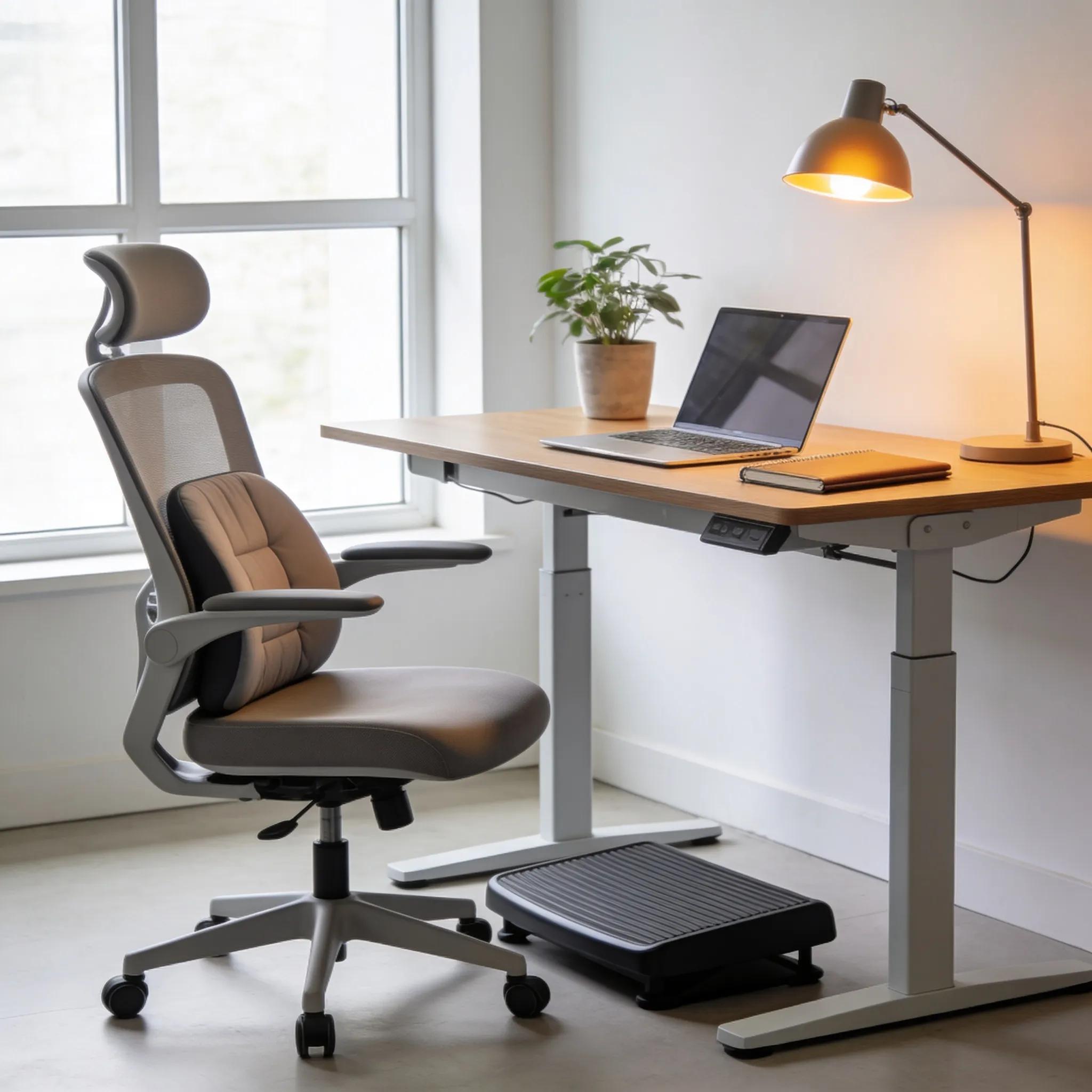
As many desk workers face challenges related to back pain, understanding the principles of office ergonomics becomes essential for promoting spinal health. This article will explore various causes of back pain, how proper ergonomics can alleviate these issues, and the effective solutions offered by TheraSpine for lumbar support. Ergonomics plays a crucial role in creating a workspace that minimizes strain and discomfort, ensuring that desk workers remain productive without suffering from chronic pain.
In this guide, we will discuss the impact of poor desk ergonomics on lumbar pain, outline key ergonomic principles, delve into the features of TheraSpine lumbar pillows, identify ergonomic desk accessories, suggest exercises, and present scientific evidence supporting these solutions.
What Causes Back Pain in Office Workers and How Does Ergonomics Help?
Back pain among office workers is predominantly caused by prolonged sitting, which can lead to issues such as muscle strain and poor posture. When ergonomically unsound practices are adopted, discomfort and pain often follow, affecting productivity and quality of life. Ergonomics offers a solution by designing workspaces that promote efficiency and comfort, significantly reducing the risk of back pain.
How Poor Desk Ergonomics Contributes to Lumbar Pain
Poor desk ergonomics often involve improper desk height, inadequate chair support, and incorrect monitor positioning. These factors contribute to lumbar pain in several ways:
- Desk Height: If the desk is too high or low, it forces the body into awkward positions, straining the back and shoulders.
- Chair Support: A lack of lumbar support allows the lower back to slouch, which exacerbates pain.
- Monitor Position: An improperly placed monitor can lead to neck strain, compounding back issues.
What Are the Key Principles of Office Ergonomics for Spine Health?
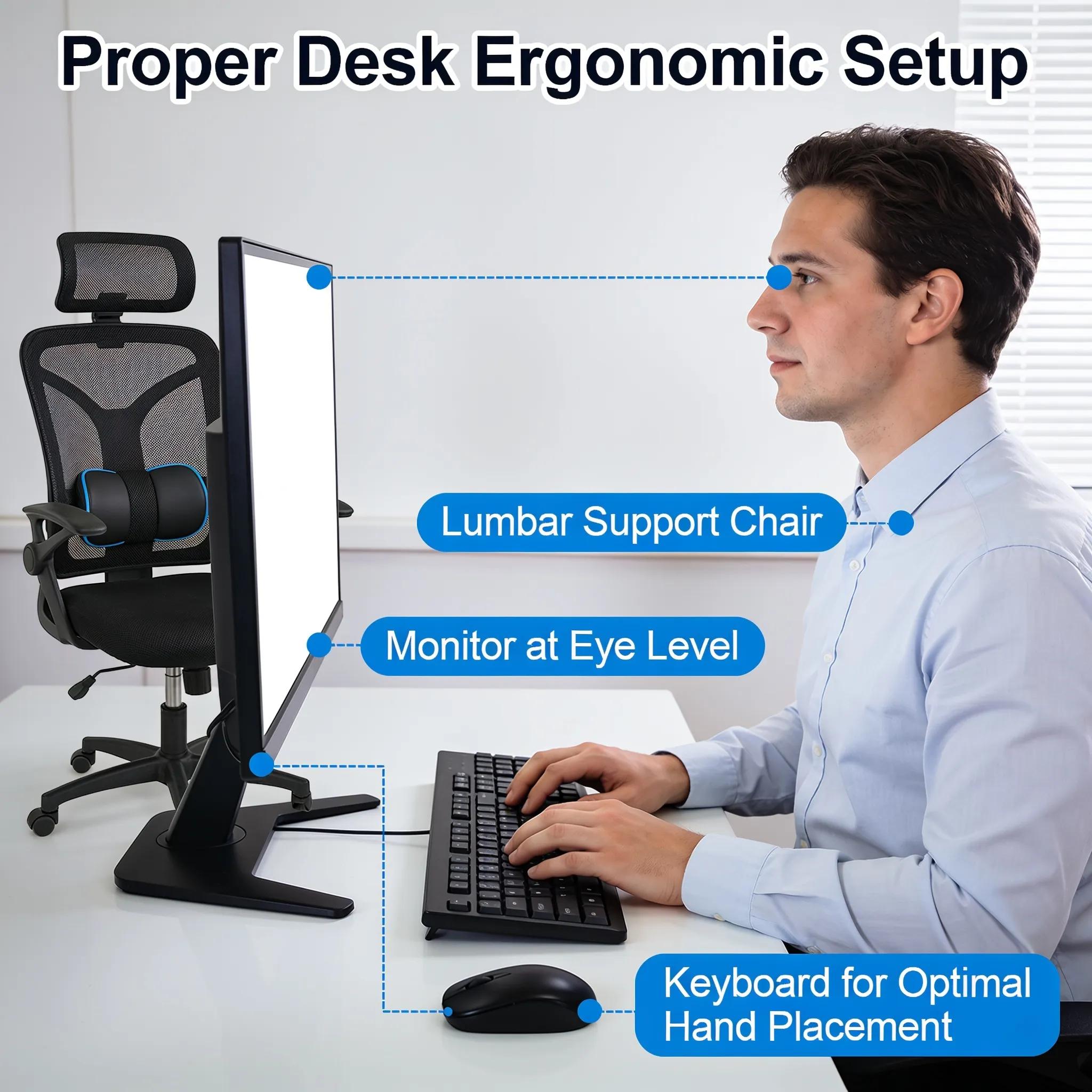
Understanding the fundamental principles of office ergonomics is key to ensuring spinal health:
- Seating Position: Chairs should support the lumbar curve naturally, reducing the risk of slouching.
- Monitor Height and Distance: Monitors should be at eye level and an arm's length away to prevent neck strain.
- Laptop Ergonomics: Using separate keyboards and mice with laptops can maintain a more ergonomically healthy posture.
These principles highlight the importance of an ergonomically designed workspace that can significantly mitigate lumbar pain.
How Do TheraSpine Lumbar Pillows Provide Targeted Support for Desk Chair Users?
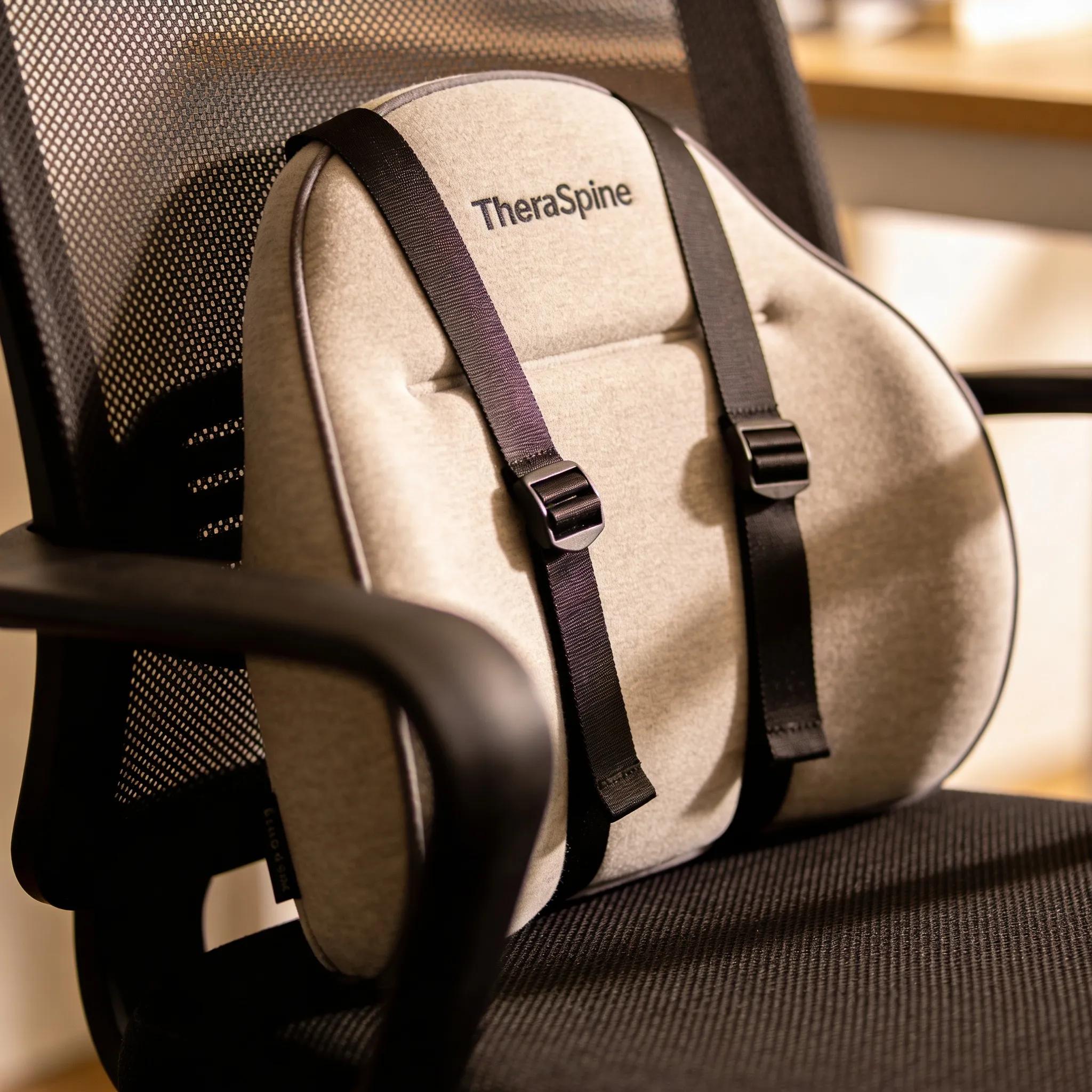
TheraSpine's lumbar pillows are specifically designed to support the lumbar region of the back, providing targeted relief to those who spend extended periods seated. These pillows utilize advanced ergonomic features to enhance comfort and promote better posture.
What Ergonomic Features Define TheraSpine Lumbar Pillows?
| Feature | Description | Benefit |
|---|---|---|
| High-density Foam | Offers firm yet comfortable support | Reduces pressure on the lumbar spine |
| Adjustable Straps | Ensures secure placement on any chair | Provides consistent lumbar support |
| Breathable Fabric | Enhances comfort during extended use | Keeps the user cool and comfortable |
These features highlight how TheraSpine lumbar pillows can effectively address back pain associated with desk work.
How Does TheraSpine Technology Aid Posture Correction for Office Workers?
TheraSpine employs innovative technology in its products to facilitate posture correction. The lumbar pillows are designed to encourage a neutral spine position, promoting the natural curvature of the lumbar region. Regular use can help retrain the back muscles to maintain good posture over time. Users typically report improved comfort and decreased levels of back pain after integrating these pillows into their workspace, demonstrating the product's effectiveness.
What Are the Best Ergonomic Desk Accessories to Complement Lumbar Support?
Complementary ergonomic accessories can enhance the lumbar support provided by TheraSpine pillows. Adding these accessories can further optimize the workspace for comfort and health.
Which Office Chair Adjustments Enhance Back Pain Relief?
Proper adjustments to office chairs can maximize back pain relief. Effective adjustments include:
- Lumbar Support Settings: Chairs should have adjustable lumbar support that can be positioned to fit the user’s unique spinal shape.
- Seat Depth Adjustment: Ensuring the seat depth accommodates the length of the legs is vital for supporting proper posture.
- Armrest Height: Armrests should be adjustable to allow for relaxed shoulders and supported arms, reducing strain on the back.
What Posture Correction Devices Should Office Workers Consider?
In addition to lumbar pillows, several devices can aid in maintaining good posture:
- Ergonomic Chairs: Designed to support the body's natural posture, reducing strain.
- Footrests: Help maintain an optimal sitting angle for leg comfort and spine alignment.
- Posture Correctors: Wearable devices that encourage correct posture throughout the day.
These devices work in tandem with lumbar support to create a more ergonomic workspace.
Which Exercises and Stretches Effectively Reduce Back Pain for Office Workers?
Incorporating exercises and stretches into the daily routine can be beneficial for reducing back pain among office workers. Regular movement helps alleviate muscle tension caused by prolonged sitting.
What Are Recommended Back Pain Exercises for Desk Jobs?
Several effective exercises can be performed to alleviate back pain:
- Seated Torso Twist: Improves spinal mobility and relieves tension.
- Pelvic Tilts: Strengthens core muscles supporting the lower back.
- Standing Calf Raises: Counteracts the effects of long periods spent sitting.
How Often Should Office Workers Perform Posture-Improving Stretches?
Office workers should aim to perform stretches every 30-60 minutes throughout the day. This practice helps maintain flexibility, reduce muscle tension, and support overall spinal health. Incorporating breaks for short stretches not only combats discomfort but can also enhance focus and productivity at work.
What Scientific Evidence Supports TheraSpine Solutions for Office Ergonomics?
Scientific studies have shown that the integration of lumbar support can significantly alleviate back pain for desk workers. Research highlights the efficacy of ergonomic solutions in improving comfort and reducing discomfort associated with prolonged sitting.
Which Clinical Studies Validate Lumbar Support Effectiveness?
- Study A: Demonstrated a decrease in reported pain levels among participants using lumbar pillows.
- Study B: Found that users experienced improved posture and reduced instances of discomfort during prolonged sitting.
- Study C: Validated the long-term benefits of continuous use of lumbar support in reducing chronic back pain.
What User Testimonials Demonstrate TheraSpine’s Impact on Back Pain?
User feedback has consistently highlighted positive outcomes from using TheraSpine products. Many have reported that the lumbar pillows have significantly improved their experiences at work, leading to:
- Enhanced comfort while seated.
- Lower levels of fatigue and discomfort during long work hours.
- Greater productivity due to decreased pain distractions.
These testimonials echo the clinical evidence supporting TheraSpine's ergonomic solutions.